
Two books with two clear jobs.
Use Volume One for the science, human evidence, approval status and core safety. Use Volume Two for handling, product risks, blends, stacks and user reports.
The Peptides Decoded Series
Last reviewed:
A clear guide to real-world use, blends, stacks, handling, safety and harm reduction—without invented protocols.
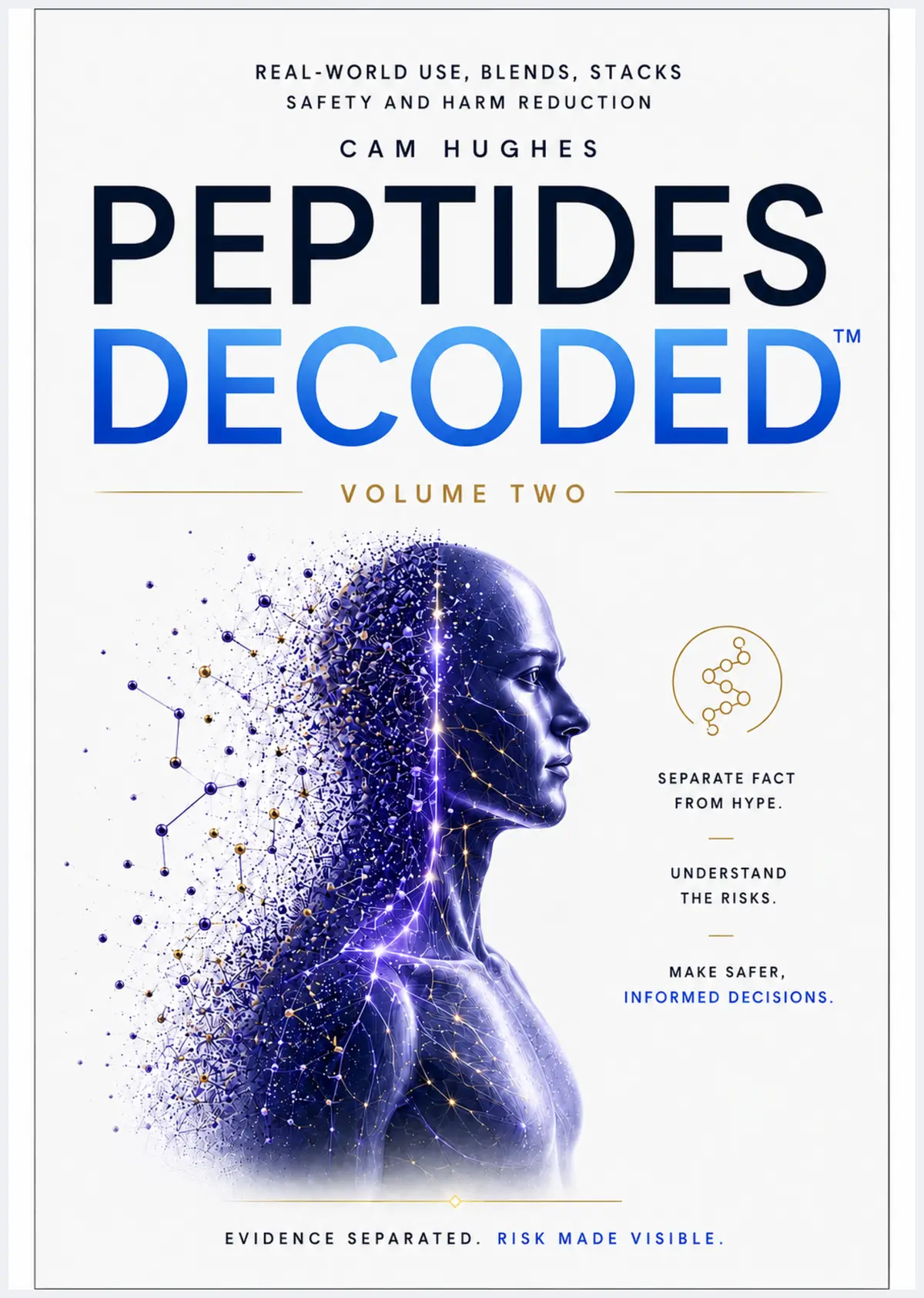
What this volume does
Volume Two adds the information people see outside official medicine labels. It explains what can be learned from it—and what cannot.
Easy to use
Each page clearly shows the evidence, approval status, safety issues and what is still unknown.
Use Volume One for the science, human evidence, approval status and core safety. Use Volume Two for handling, product risks, blends, stacks and user reports.
User reports are grouped into good, bad and mixed results. They are then compared with what the research can actually support.
Included with the ebook
Volume Two contains 690 pages and includes both the designed PDF and accessible EPUB. The same evidence, status, safety and unknowns system runs throughout.
pages in this volume
designed PDF + accessible EPUB
evidence grading throughout
Volume Two · A$34 AUD · GST included
690 pages · designed PDF + accessible EPUB · instant digital delivery.
The method, in plain view
These grades describe evidence maturity. Approval, product identity, safety and personal suitability remain separate questions.
Research and its limits stay together, including what has not been established. A grade is not a treatment recommendation or a guarantee of personal benefit.
No. Volume One establishes the foundations and core directory. Volume Two continues from Chapter 55 with additional compounds, handling and harm-reduction questions, blends, stacks and field notes.
Source: Peptides Decoded — Volume Two, Series Guide, p. 9.
Grade C indicates a credible signal, usually from smaller, earlier or context-specific human research. It does not mean that every proposed use has been established.
Source: Peptides Decoded — Volume Two, Evidence-Grade Key, p. 10.
Grade D describes evidence that is predominantly preclinical, indirect or based on very limited human research. The study setting and limitations remain important.
Source: Peptides Decoded — Volume Two, Evidence-Grade Key, p. 10.
Read your way
Adjustable text size, semantic headings, linked navigation and text alternatives for figures help you read in compatible apps and e-readers.
Reading features vary by app and device. Ask us about accessibility →
Try a chapter before you buy
Get the free “How the grades work” chapter from Longevity Decoded. See how the claim, study setting and outcome sit beside every verdict.
Read the free sample PDF →Request the free Longevity chapter by email. Marketing is optional.
Loads MailerLite’s form. Privacy policy.
The Complete Library · PDF + EPUB
Peptides Decoded Volumes One and Two, Supplements Decoded, Menopause Decoded and Longevity Decoded. All five books, each in PDF + EPUB.
Build your reference shelf in PDF + EPUB. Five complete books. Ten digital editions.
A$99.00 AUD
Save A$71 against five standalone standard prices of A$34. During the launch offer, those five total A$140—a saving of A$41.
Weight Loss Decoded joins the bundle when it launches. It is not included in this five-book collection.Reader feedback
No reader reviews published yet. Read the book? Tell us what helped and what could be clearer.
Share your review →